Recipe: Sugar-free pomegranate molasses from fresh fruit
Tyrant Farms' articles are created by real people with real experience. Our articles are free and supported by readers like you, which is why there are ads on our site. Please consider buying (or gifting) our books about raising ducks and raising geese. Also, when you buy through links on our site, we may earn an affiliate commission. Learn more
Our 10+ year old heirloom pomegranate trees have matured to the point that they now produce wheelbarrow loads of fruit each fall.
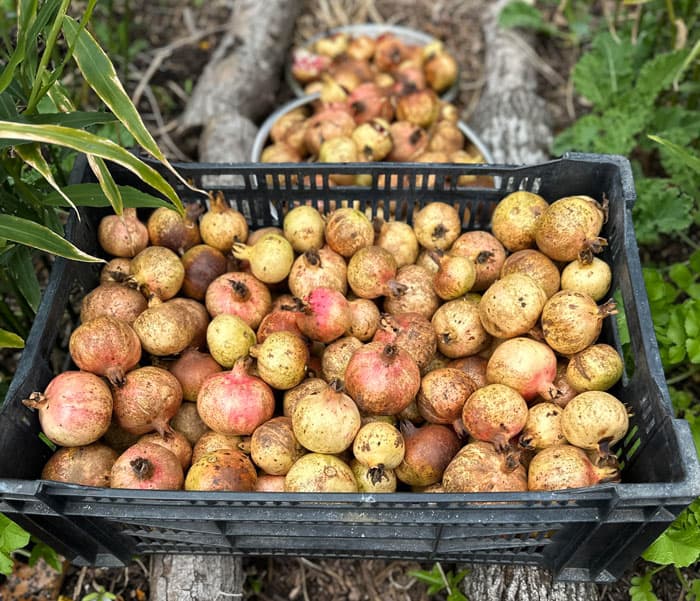
One thing we’ve learned over the years is that our pomegranates taste better after being nipped by a frost. However, the challenge in our relatively wet South Carolina climate is keeping the fruits from splitting open before they reach optimal ripeness. After all, pomegranates are native to the Mediterranean, specifically modern day Iran, where rain is scarce. That means we provide zero supplemental irrigation for our pomegranate trees.
Even when perfectly ripe, our heirloom pomegranates have an intense tang that’s absent in modern varieties. It seems to us that today’s cultivars are bred purely for sweetness and large size, but are lacking flavor nuance and tang.
Regardless, you can make this delicious pomegranate molasses recipe from any whole pomegranates — whether homegrown or store bought — since the flavors become so intensified in the process. However, this is NOT a recipe to make pomegranate molasses from pomegranate juice.
What is pomegranate molasses?
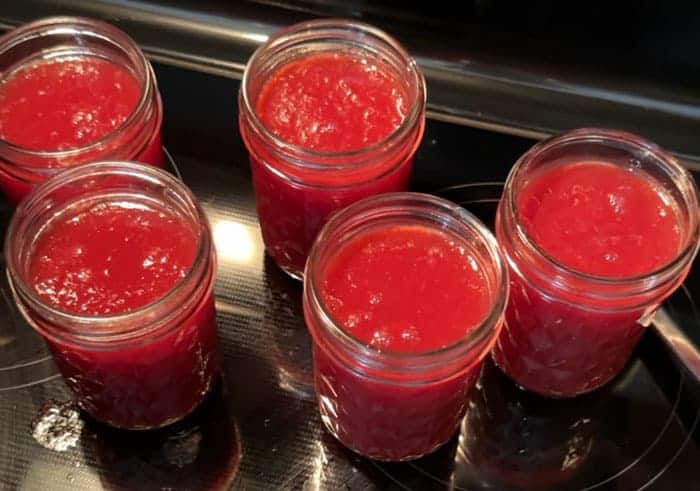
In case you’ve never heard of it, pomegranate molasses is a reduction made by cooking down pomegranate juice and/or pulp until it’s thick and syrupy. The flavor is sweet, sour, tangy, and intense.
Most store bought pomegranate molasses also contains sugar or date syrup to increase the sweet flavor.
Why our pomegranate molasses recipe is different:
Our pomegranate molasses recipe is different from commercial formulations and other internet recipes for the following reasons:
- Whole fruit – We start with whole pomegranate seeds rather than pomegranate juice.
- Fiber – We use the fiber / pulp from the fruit, which makes it healthier. The final consistency is more similar to ketchup than molasses.
- No added sugar – To boost sweetness, we use liquid stevia rather than cane sugar or date syrup. You don’t have to add stevia if you don’t want to. Or you can add the sugar alternative of your choice.
If all this sounds like what you’re looking for in a pomegranate molasses recipe, let’s get going!
What you’ll need to make this recipe:
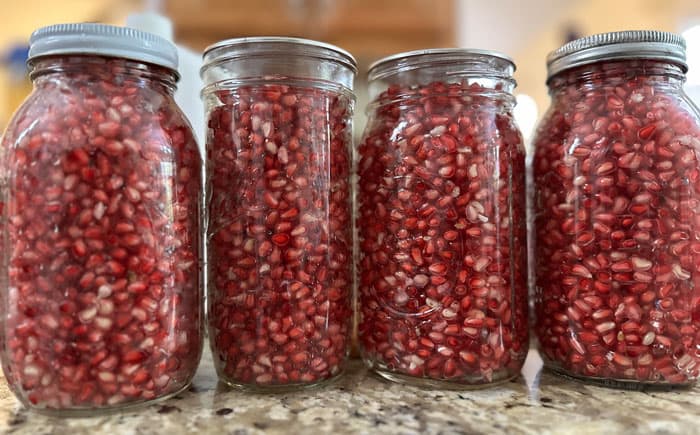
1. Pomegranates of any type and quantity – You can use any pomegranate variety to make this recipe. Likewise, you can use any quantity of pomegranates. However, to make the effort worthwhile, we recommend using at least 1 quart of pomegranate seeds.
Note: If you start with 1 quart of seeds, you’ll probably end up with about 1/4 cup of pomegranate molasses.
Tip: To quickly extract whole seeds from a pomegranate, first cut the fruit in half. Then loosen the seeds inside by gently but firmly pulling back on the exterior of the pomegranate skin. Then use a large wooden spoon of spatula to gently whack the back/skin surface of the fruit over a bowl. The seeds will soon start to pop out into the bowl. Here’s a quick video showing you how.
2. Chinois strainer – The most important kitchen tool you’ll need for this pomegranate molasses recipe is a chinois strainer with a pointed wooden pestle and stand (like this one on Amazon).
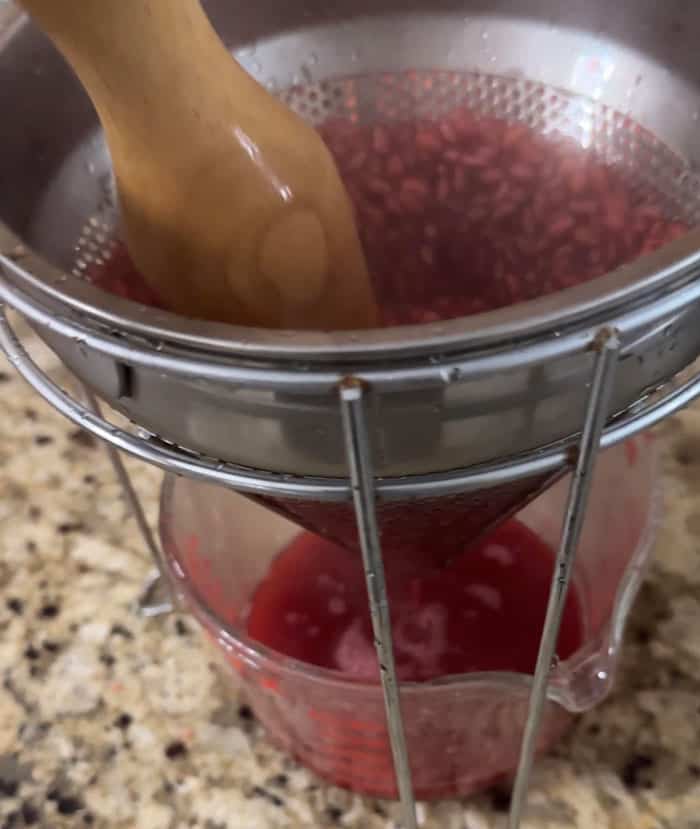
Alternative: Don’t have a chinois strainer? No worries! Use a standard metal pasta strainer and a large silicone spatula or wooden spoon. This alternative won’t work as well as a chinois strainer, but it will suffice in a pinch.
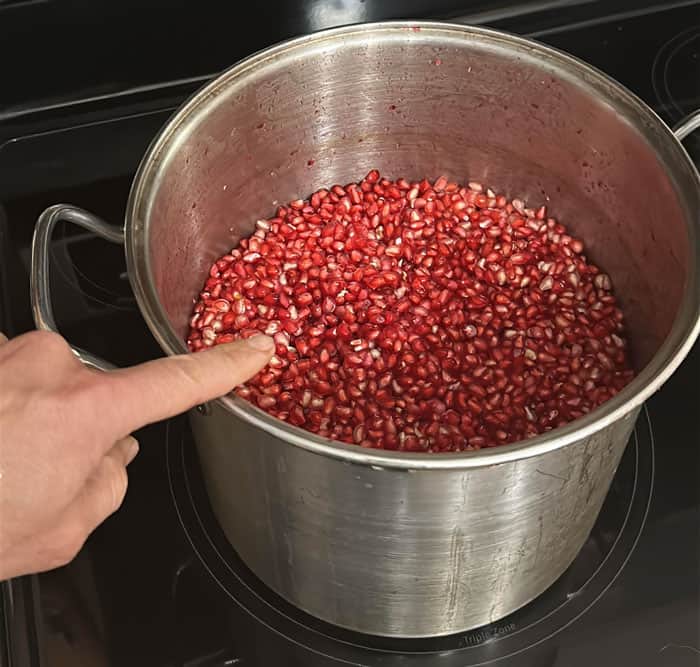
3. Stainless steel pot – Use a stainless steel or ceramic pot, nothing with teflon, otherwise the high acidity of the pomegranates is likely to extract chemical compounds from the no-stick surface that you don’t want to eat.
Select a pot that gives you at least a few inches of wiggle room at the top when you first put your seeds in.
4. Canning jars or fridge storage containers – We have almost two decades of experience canning foods using the water bath method. However, this recipe has not been safety tested by the National Center for Home Food Preservation (NCHFP) and we don’t know whether you’re an experienced canner.
Therefore, to be safe, we recommend using either a pressure canner or simply storing your finished pomegranate molasses in the fridge.
Recipe: Pomegranate molasses
Sugar-free pomegranate molasses made from fresh pomegranates
Equipment
- chinois strainer
- stainless steel or ceramic pot
Ingredients
- whole pomegranate seeds (NOTE: If you start with 1 quart of seeds, you'll end up with about 1/4 cup of finished pomegranate molasses, so plan accordingly.)
- splash of water (To prevent scalding.)
- sweetener of your choice, to taste (We use liquid stevia.)
Instructions
- Place whole pomegranate seeds into pot on stovetop burner turned to medium heat. Add a splash of water to prevent fruit scalding.
- Cook pomegranates for ~20 minutes, stirring every few minutes to make sure all seeds cook evenly and don't stick to bottom of pan.
- Remove pomegranates from heat. Place chinois strainer over glass or metal bowl. Strain cooked pomegranates through the strainer using the pointed wooden pestle to remove as much of the juice and pulp from the seeds as possible. Alternative: If you don't have a chinois strainer, you can use a metal pasta strainer and a silicone spatula or wooden spoon.
- Measure how much juice and pulp you have because: a) you want to reduce it by about 50%, and b) you want to know how many canning jars you'll need.
- Pour juice and pulp back into pot on stovetop over medium low heat. Cook until liquid reduced by half. Larger batches (multiple quarts) may take over an hour, smaller batches (1 quart or less) can be done in ~30-45 minutes. Also, while cooking the pomegranate molasses, you can carefully skim off any foam that forms on the surface. (Save and use the foam because it's beautiful and delicious!)Once you've reduced the molasses to about 50% of its original level, add liquid stevia up to the sweetness level you desire.
- When done, can or store in fridge. We use the water bath method, but the only 100% safe canning method is to use a pressure canner. Alternately, if you're doing small batches of pomegranate molasses, you can just store your jars in the fridge.Use your pomegranate molasses as a flavoring in anything and everything you can think of – morning yogurt, salad dressing, shakes, sauces, ice cream, and more!
We hope you enjoy this recipe each year when pomegranate season arrives!
-Aaron and Susan