
Where to buy ducklings or ducks for your backyard or small farm
Tyrant Farms' articles are created by real people with real experience. Our articles are free and supported by readers like you, which is why there are ads on our site. Please consider buying (or gifting) our books about raising ducks and raising geese. Also, when you buy through links on our site, we may earn an affiliate commission. Learn more
There are both practical and ethical considerations to keep in mind when you’re trying to decide where to buy ducklings or mature ducks. Depending on your location and needs, there might not be a perfect answer to the question “where’s the best place to get ducklings or ducks?”
However, to help you make the best decision possible, let’s take a deeper dive into the available options…
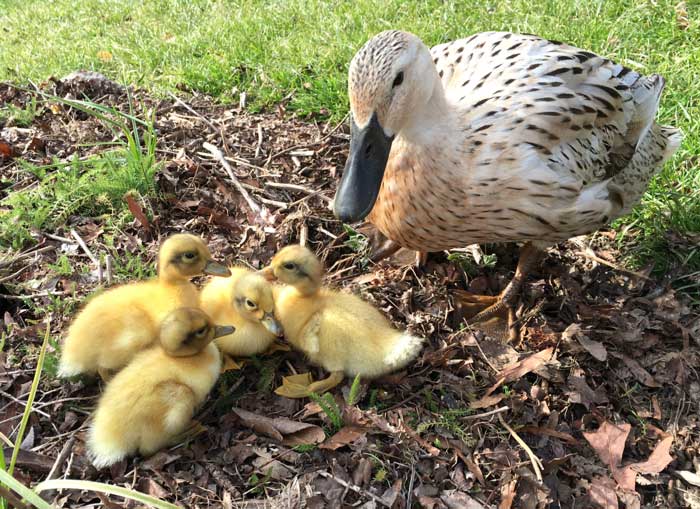
5 ways to purchase ducklings or ducks
For starters, here are the five basic choices (listed from largest to smallest operations) where you can purchase ducklings or ducks:
- Large/national breeders,
- Farm supply stores,
- Small local/regional breeders and farms,
- Waterfowl/wildlife rescue operations,
- Individuals in your area (backyard poultry keepers).
Now let’s dive a bit deeper into the pros and cons of the various choices:
Option 1: Large/national breeders and hatcheries
Metzer Farms and Murray McMurray Hatchery are probably the two most well-known, large-scale duck breeding operations in the US. (Holderread’s Waterfowl Farm, another hatchery that would ship ducklings, used to be the gold standard for duck breeding work in the U.S., but they’ve largely shut down after the founders transitioned into retirement.)
Here we should also mention an excellent breeder/hatchery that’s a small operation, but one that will still ship ducklings and ducks: Sand Hill Preservation Center.
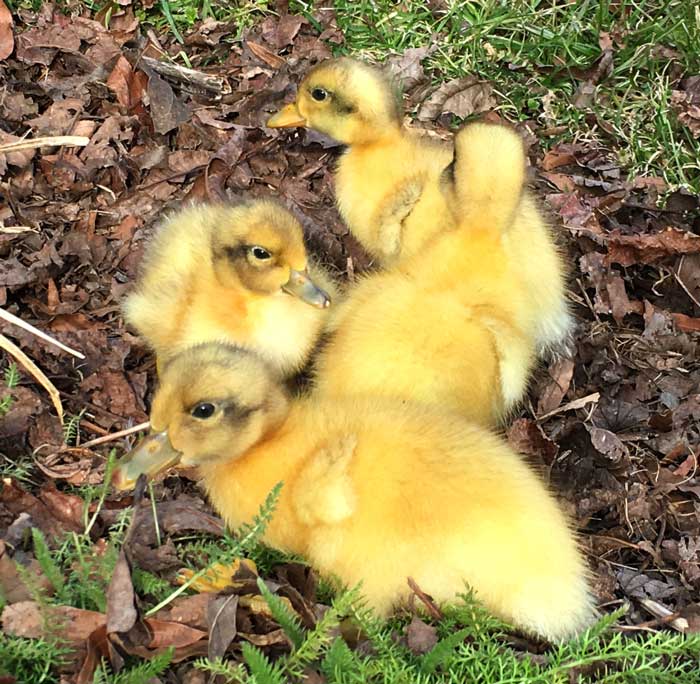
Over the years, we’ve ordered two rounds of ducklings from Metzer Farms and have had only good experiences to report. However, there is an inherent risk any time you order live animals to be shipped by mail: the arrival of dead or critically ill ducks.
Pros:
- Wide variety of breeds to choose from;
- You can order sexed runs (examples: all females, all males, or male/female mix.)
Cons:
- Since mail-order hatcheries ship just-hatched ducklings in the mail (albeit with grow-gel and a heat pack), there’s no guarantee that the ducklings will be alive by the time they reach your local post office. All it takes is one mistake along the way for things to go terribly wrong. We have read horror stories of people receiving a box of dead ducklings due to USPS mishaps and shipping delays.
You can also opt to order fertilized duck eggs from the same operations in order to eliminate the risk of “death by mail,” but you won’t be able to get a sexed run when you order your eggs.
Option 2: Farm supply stores
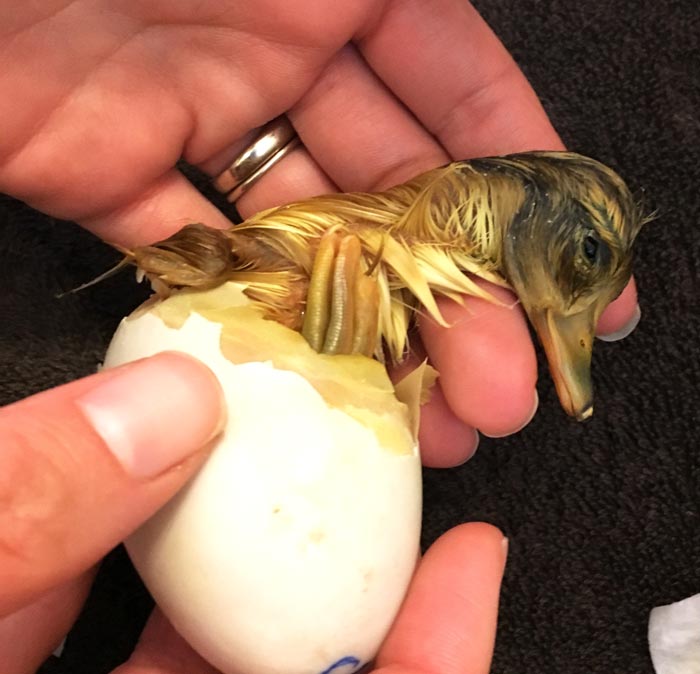
Please do not source ducklings from a farm supply store. This practice encourages impulse purchases and/or Easter duckling purchases for kids, both of which are highly irresponsible. Your purchase will financially incentivize the store to continue this practice. (In fact, you may want to politely bring this up with the manager if you see them selling ducklings.)
Ducks require a lot of specialized knowledge, predator-proof infrastructure, and care. Thus, they should not be purchased on a whim or impulse. Doing so leads to a very high probability that the ducks will suffer and die because the buyers will not be adequately prepared to raise them.
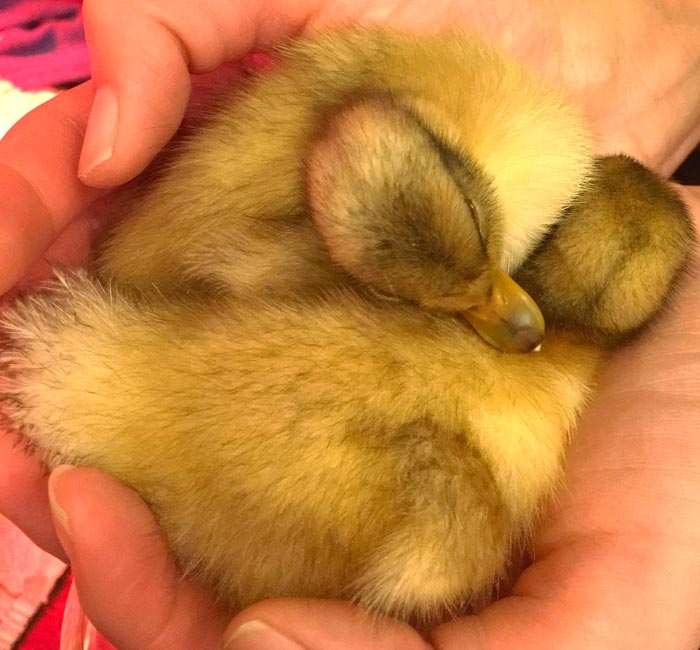
We avoid going to nearby parks with ponds in early summer due to the number of tame, domestic ducks who have been dumped there by people who impulse-bought ducklings in the spring. We can’t bear to see it.
Once the buyers’ kids have lost interest in the animals and/or the human adults realize they’ve bitten off more than they want to chew, the animals are “set free” in the wild. This is akin to letting your pet chihuahua free in a forest. Neither animal will meet a good fate. And in the case of dumped domestic ducks, they might also end up mating with wild Mallards causing genetic pollution and hybrid offspring that can’t fly.
Pros:
- None… Other than the fact that the ducklings are not shipped through the mail.
Cons:
- Incentivizes stores to aid consumer impulse purchases of domestic ducks;
- You don’t usually know what breed you’re getting;
- You don’t know what sex you’re getting.
Option 3: Small local/regional breeders and farms
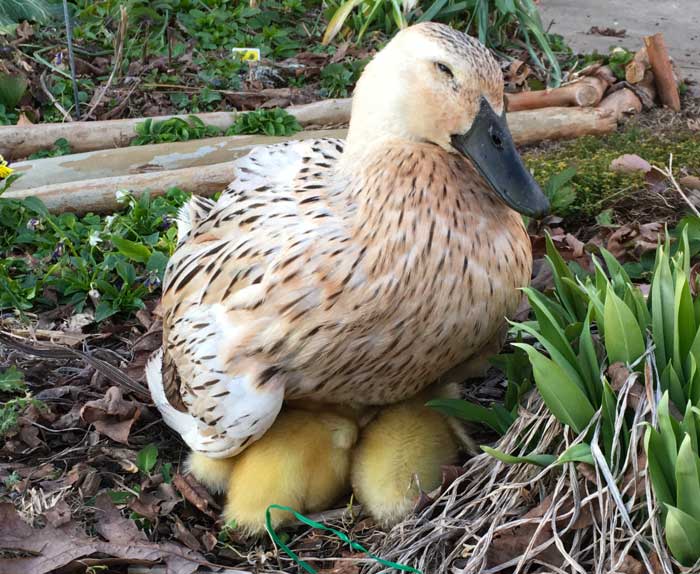
Sourcing fertilized eggs, ducklings, or adult ducks from smaller local/regional breeders, hatcheries, and farms near you can be a better choice than larger mail-order operations. This approach not only helps support local food systems, it also helps encourage genetic diversity and resilience in available breeding stock.
Perhaps the greatest benefit of “going local” is the ability to drive to the operation to pick up your new ducklings or ducks rather than having them shipped in the mail, thus eliminating the risk of animals dying in transit. In addition to search engines, a good way to find a duck breeder near you is The Flock Directory, created by Liz Palmer. Each listing contains available breeds plus the operation’s location and contact information.
Pros:
- You can drive to pick up your animals to eliminate the chance of them dying during shipping.
- Support local farms and breeding operations;
- Help increase genetic diversity and resilience in domestic duck breeding stock.
Cons:
- There may not be a breeding operation/hatchery near you.
- There may be fewer breeds to choose from, or the breeds you want may not be available.
- You may not be able to get sexed runs, or you might have to do the sexing yourself to get the sex ratios you want.
Related read: How to sex ducklings or ducks
Option 4: Waterfowl/wildlife rescue operations
If at all possible, we’d highly recommend you get ducks from waterfowl/wildlife rescue operations. For instance, if you live near the Carolinas, Carolina Waterfowl Rescue (CWR) often has ducklings and mature domestic ducks that need a permanent home. Six of our ducks are rescues from CWR, and any future ducks we get will be from rescue operations.
Rescue operations perform heroic work on shoestring budgets. Three ways you can help them:
- adopting animals from them;
- donating money and essential supplies (food, paper towels, etc);
- volunteering and spreading the word.
Most of the ducks in their care are domestic breeds raised by people who then dumped them in the wild, typically at local ponds. If left at these ponds, almost all of these domestic ducks will suffer and die within days or weeks since they have no idea how to source food or fend for themselves, nor can they fly to escape threats or find better foraging spots. While alive, they might also mate with wild Mallards, creating genetic pollution.
Again, if at all possible we highly encourage you to get your ducks from waterfowl rescue operations in order to: a) reduce demand for “new” ducks, and b) help clean up the mess created by irresponsible people who abandoned ducks they never should have gotten in the first place. Another nice thought: when you adopt one rescue duck, you make room for another duck to be saved by that rescue. So you’re saving the life of two ducks every time you adopt one.
Pros:
- You can drive to pick up your ducklings or ducks;
- Help clean up a mess made by other people while providing a high quality life for abandoned ducks.
- Support the efforts of local animal rescue operations.
Cons:
- There may not be a rescue operation near you.
- You’ll probably be asked or required to take at least one drake alongside any females you get, but each rescue has different policies.
Take a deeper dive here: Why you should get rescue ducks instead of buying from breeders or farm stores.
Option 5: Individuals in your area (backyard poultry keepers)
True story: Our very first ducklings came from another local backyard duck breeder in our area. In hindsight, we’re not sure which of us knew less about ducks at the time.
Weeks after our purchase, our ducklings started to develop their sex-linked vocalizations. That was when we realized we’d mistakenly gone home with three males and one female. Oops. As you now know from reading the information earlier in this chapter, that male-to-female ratio is the inverse of the ideal ratio you’d want in a backyard flock, assuming you want any males at all.
In case you don’t know, this is the very opposite of the ideal ratio you’d want in a backyard flock, assuming you want any males at all. (See: Should I get male or female ducks or both?)
Thankfully, a friend with a nearby farm adopted two of our drakes. The remaining drake, Sir Winston Duckbill, has been a steadfast member of our home flock for over a decade since. Despite his age, “Winnie the Screw” as we affectionately call him, still has to be separated from the girls for much of the year when his hormones are running hot, but we still love him.
Moral of the story: Local backyard breeders can be a good place to get your ducks. However, if you want a sexed run, either: a) you’ll probably want to know how to vent-sex ducklings, or b) you’ll want to get ducks once they’re old enough to sex based on vocalizations and/or appearance. If you go this route, you’ll want to also inquire about breeding practices. For instance, are there any guards/systems in place to prevent inbreeding? Are breeds kept separate — assuming you want a true heritage breed and not a hybrid?
Pros:
- Support hyper-local duck breeding;
- You can drive to pick up your ducklings or ducks;
- Possibly make long-term connections with other crazy duck people in your area (ha!).
Cons:
- There may be fewer breeds to choose from, or the breeds you want may not be available.
- Breeding practices and/or genetic diversity may not be comparable in quality compared to larger operations with more animals and professional breeding standards.
Now that you know where to buy ducklings or mature ducks plus the pros and cons of each option, you can make the decision that is best for you. Regardless of which option you choose, be sure you’re prepared to raise happy, healthy ducks from day one and for years to come!
KIGI,


More helpful articles about raising ducks:
- 11 things you should know before getting ducks
- Will you save money on eggs by raising your own ducks/poultry?
- How to choose the best duck breed (or breeds) for you
- Complete guide: how to raise ducklings.
- 3 tips to get your ducks to like you
… or browse the latest and greatest duck articles on Tyrant Farms!

I have a question: I want a self sustaining flock of ducks. Should I order males and females from different hatcheries to broaden the NDA gene pool, is this important for a healthy flock?
Hi Darrell! Great question. Here are my duck breeding suggestions if you want to have a really robust, sustainable flock:
1. Get all female ducks your first year. That way you can get acclimated to raising ducks without the extra hassle of having a mixed-sex flock. If you have multiple drakes, they’ll start aggressively fighting each other, potentially requiring separate coops/runs. Even if you have only one drake, it will start aggressively mating your females, potentially requiring a separate coop/run.
2. Don’t even start considering breeding your female ducks until they’ve made it through two laying seasons. You’re likely to have some females with congenital health/reproductive problems and you don’t want to carry those genetics forward. Instead, you only want to breed your healthiest, most robust females. Those individuals will become more evident with time.
3. In Year 2 or 3, get however many drakes you need based on the total number of females you have, the infrastructure you have in place to support them, and the scale of the breeding program you want to develop. Yes, I’d recommend getting your drakes from a different reputable breeder from your females to reduce the likelihood of inbreeding depression.
4. Rinse and repeat. Also, you may want to tag and name/number your ducks to keep good records on lineage as you move forward.