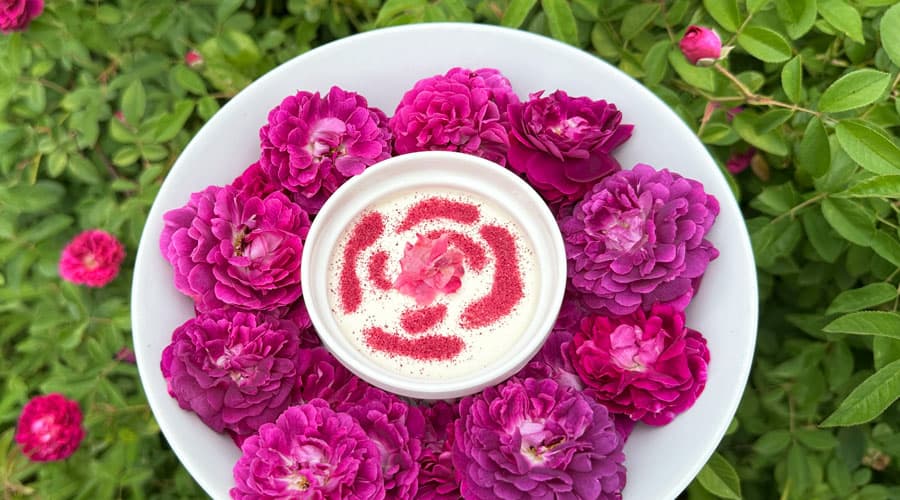
Rose flower panna cotta (made from fresh or dried roses)
Tyrant Farms' articles are created by real people with real experience. Our articles are free and supported by readers like you, which is why there are ads on our site. Please consider buying (or gifting) our books about raising ducks and raising geese. Also, when you buy through links on our site, we may earn an affiliate commission. Learn more
Watch our YouTube short to see how we made this recipe (you can leave out the fermented rose petals and rose powder for a faster version – ha!):
We enjoy collaborating with the incredible team down the street from us at Michelin-recommended Topsoil Restaurant in Travelers Rest, SC. One of the joys of our relationship is introducing them to new flavors and ingredients that we grow or forage that they may want to put on their menu. Then we get to eat there and have them blow our minds with what they create.
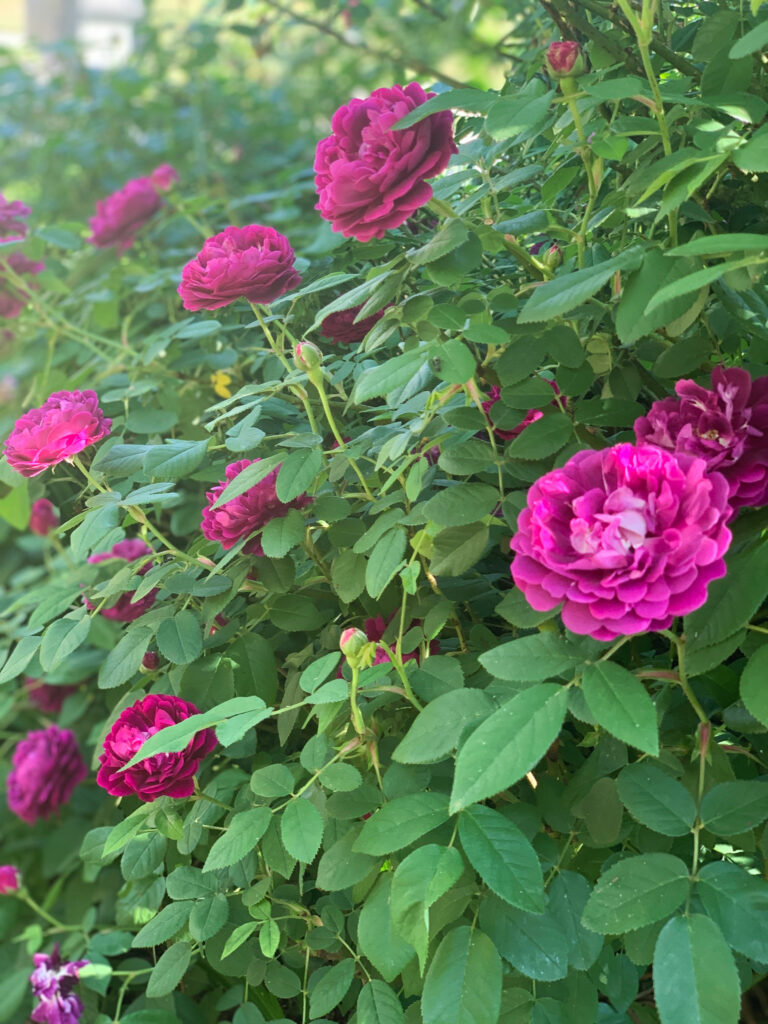
We recently introduced them to roses from our ‘Cardinal de Richelieu’ rose bush, an old-world David Austin rose that produces loads of incredibly fragrant, red-purple flowers for about 10 days each spring. We used these roses (which are organically grown) to make rose flower panna cotta for the Topsoil team to sample, and they were instantly in love.
In fact, Chef Adam Cooke immediately purchased some of our roses to begin crafting recipes for his menu. Why are we telling you this? Two reasons:
- This rose flower panna cotta recipe is really good!
- If you’re in the area, make reservations at Topsoil Restaurant! If you come in late April – early May, you may even be able to sample dishes and drinks made from our Carinal de Richelieu roses!
Related: See our edible rose guide for our top recommendations for rose hips, flowers, and more!
Selecting roses to make rose flower panna cotta:
Here are important rose selection tips to help you make this recipe:
- Fragrance – Any highly fragrant rose variety will make a good rose panna cotta. Fragrance = flavor.
- Color – For the sake of this recipe, the color of the rose is irrelevant. That’s because it won’t add enough color to show up in the final panna cotta.
- Fresh vs Dried – If you don’t have access to highly fragrant fresh roses, you could use dried roses (so long as they’re still fragrant). Dried roses will weigh less and be smaller than fresh roses, so the exact substitution ratios may require some experimentation.
- Organic – Roses are typically sprayed with lots of synthetic pesticides, which we advise people to avoid. So try to use organically grown roses if at all possible, ideally homegrown.
Important recipe flavor and preparation notes:
Heat – Rose flavor compounds are quite volatile and will disappear if subjected to high heat or any heat for too long. When cooking, carefully follow the heating and time instructions in the recipe card to make sure you don’t burn off the rose flavors.
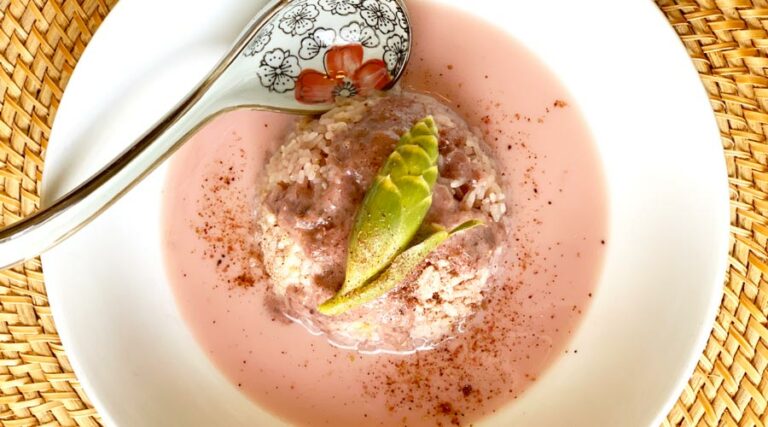
Garnish – If you want to add some rose-powered flavor and beauty to your panna cotta when serving, we highly recommend using the leftover fermented rose petals from our wild-fermented rose flower cordial.
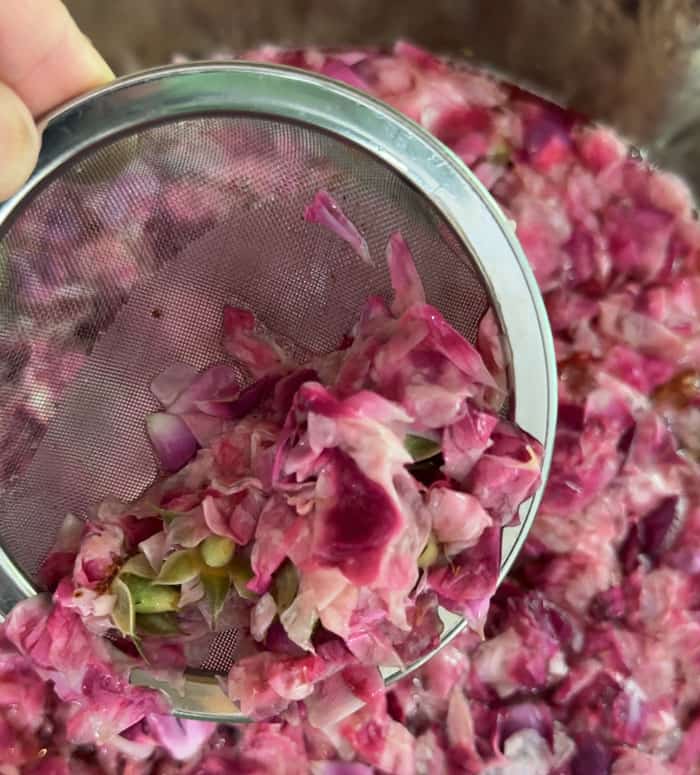
After fermentation, the rose petals are soft, delicate, and delicious. You can also dry them and put them into a spice grinder to make a vibrant and flavorful red-purple rose powder. We used both of these ingredients (petals and powder) in the pictures and video for this article!
Serve in or out of ramekins – This recipe makes about four (4) half cup servings, so use 1/2 cup ramekins if that’s how many servings you’re aiming for.
You can serve your panna cotta in or out of the ramekin you chill it in. Be mindful that there is a risk the panna cotta doesn’t neatly come out of its dish. If you want to remove it from the ramekin, just follow our instructions in the recipe card below.

Rose flower panna cotta made from fresh roses
Ingredients
- 1 1/2 cups loosely packed fresh, fragrant rose flowers (1.4 ounces if you have a kitchen scale and want to be precise)
- 1/2 cup organic half an half
- 1 cup organic heavy whipping cream
- 1/2 cup organic whole Greek yogurt – we use Wallaby
- 1/4 cup organic cane sugar
- 1 1/4 tsp gelatin (1/2 cup packet Knox gelatin)
- 1/2 tsp vanilla extract
- pinch of salt
Instructions
- Pour half & half into a medium saucepan and sprinkle the top with half a packet of Knox gelatin (1 1/4 tsp ). Off of heat, let stand ~5 min or until gelatin is softened. Place pan over medium/low heat and whisk until gelatin dissolves and mixture is steaming, about 4-5 min. Do NOT boil.
- Add whipping cream, whole rose flowers, sugar, vanilla, and salt to saucepan. Stir for about 5 minutes until the sugar is fully dissolved and the mixture is steaming, but do NOT boil. Too much heat will burn out the rose flavor. Remove pan from heat and strain liquid into measuring bowl. Once rose flowers are cool enough to touch, squeeze them by hand over strainer to extract remaining liquid. Let liquid rose cream cool until warm for 5 minutes.
- Place yogurt in a medium-sized bowl with a pouring lip. Whisking constantly, gradually add warm rose cream. Once the mixture is completely smooth, strain through a fine mesh sieve if desired, then quickly pour into ramekins. Let the liquid cool to room temperature inside ramekins, then cover with plastic wrap. Refrigerate until fully set, about 4 to 6 hours.
- Serving tip: Garnish with fermented rose petals and/or fermented rose flower powder from our fermented rose flower cordial recipe! See link and notes in article.
- You can serve rose panna cotta in the dish you poured it into. Alternately, you can also remove the panna cotta from the ramekin as follows: 1) scrape around the outside edges with a knife, dip the ramekin in very warm water for about 10 seconds, then turn it upside down on the desired serving dish. (Not too long in the water or it could melt!) The panna cotta should then "blop" out of the ramekin with a good shake, but you may need to cut around the edges one more time to aid removal.
Once you’ve enjoyed a serving of rose flower panna cotta, please let us know what you think! Please share, comment, or rate our recipe.
Thank you,
-Aaron & Susan