Juniper berry, yuzu, honey fermented cordial recipe
Tyrant Farms' articles are created by real people with real experience. Our articles are free and supported by readers like you, which is why there are ads on our site. Please consider buying (or gifting) our books about raising ducks and raising geese. Also, when you buy through links on our site, we may earn an affiliate commission. Learn more
Looking for a great way to use juniper berries? You’re in the right place!
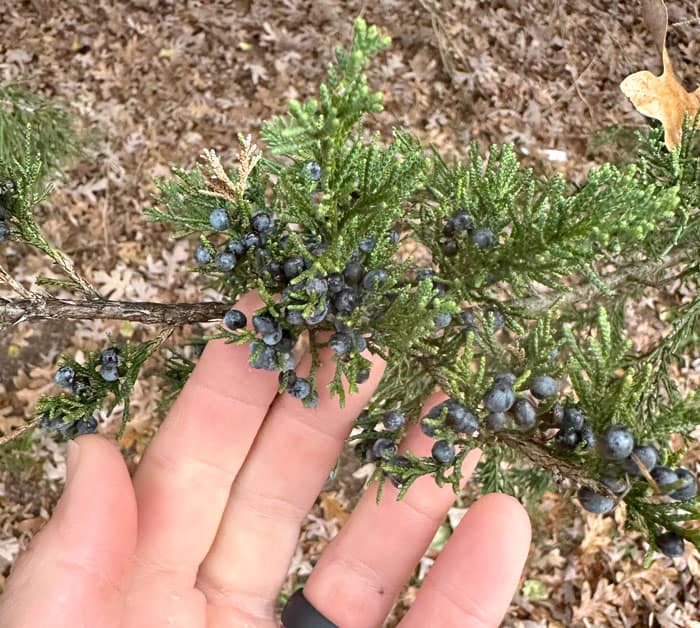
In case you’ve never tried them before, juniper berries have an intense berry-pine-citrus flavor. They’re a great flavoring, not something you want to eat by the handful.
See: How to find and use juniper berries from Eastern red cedars
We use juniper berries from our native Eastern red cedar (Juniperus virginiana) to flavor a delicious wild-fermented cordial. Note: “Wild” ferment means the natural lactic acid bacteria (LAB) and yeast in/on the juniper berries and other ingredients do the fermenting for you; no commercial inoculants are needed!
In addition to juniper berries, this simple, yet delicious recipe also features the amazing lemon-grapefruit flavor of yuzu, a rare cold-hardy citrus we grow in-ground here in zone 8A on the outskirts of Greenville, SC. (See: How to grow yuzu in cool climates.)
Substitution: If you don’t have yuzu, simply substitute a Meyer lemon or other type of lemon.
This fermented cordial is honey-sweetened using non-pasteurized honey. During the brief ~10 day fermentation process, much of the sugar in the honey is consumed by beneficial microbes, resulting in unbelievable flavor and a bubbly effervescent beverage. It’s also important to note that this is a non-alcoholic drink with an ABV somewhere in the range of vinegar or kombucha.
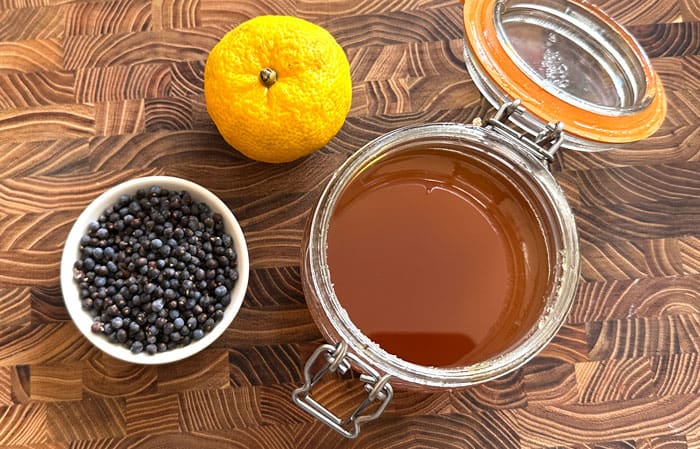
Step-by-step with process photos
1. What you’ll need:
Materials:
- one glass quart jar (don’t use plastic or it will leach into the ferment)
- mortar and pestle to grind the juniper berries
Ingredients:
- 1 whole ripe yuzu (substitute: one lemon)
- 1/4 cup fresh or dried juniper berries
- 1 cup unpasteurized honey
- 1 tsp citric acid (this bumps up the acidity to prevent the development of funky flavor notes)
- water as-needed to get to the 3.5 cup level on quart jar AFTER other ingredients added
2. Prepare ingredients and add them to jar
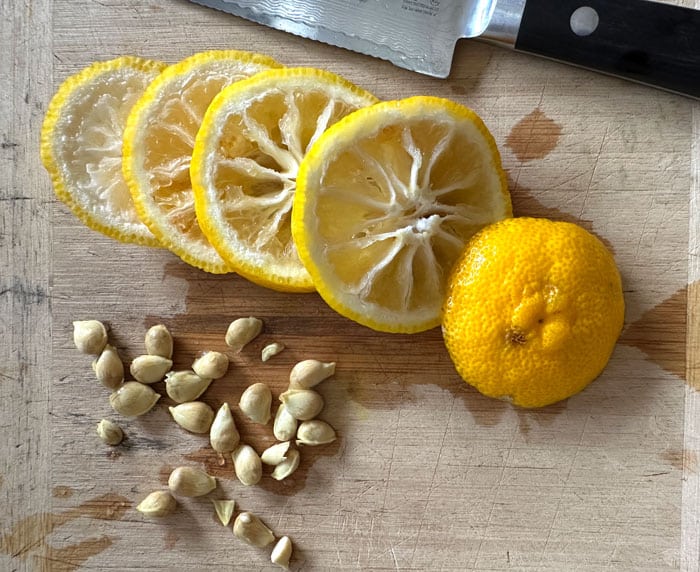
Thin-slice your yuzu, then remove the seeds. You might want to do this step on a ceramic plate to capture as much of the yuzu juice as possible.
Mash the juniper berries in a mortar and pestle.
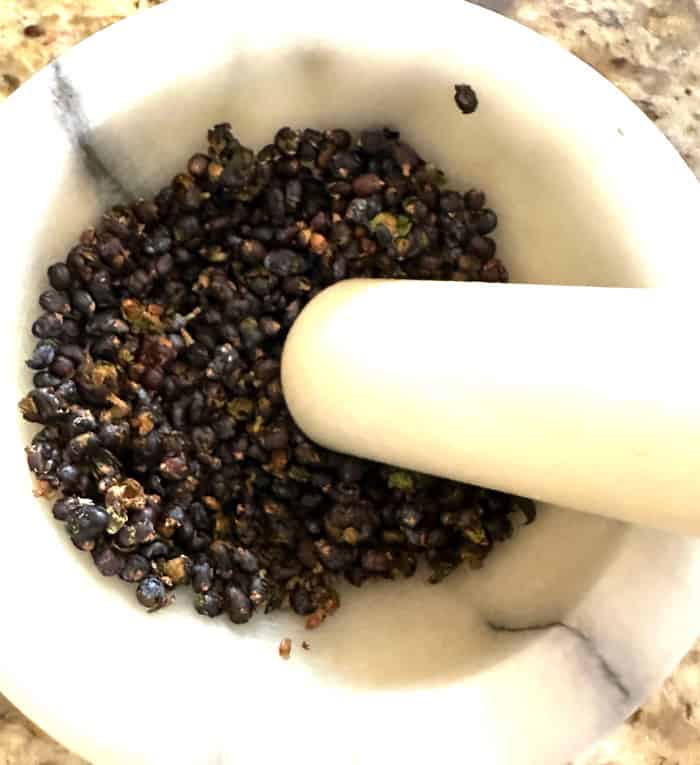
Add the yuzu, juniper, honey, and citric acid to a 1 quart glass jar. Next, add water up to around the 3.5 cup mark on the jar. Stir ingredients together but don’t worry if the honey doesn’t fully combine yet. That will happen over the next 12-24 hours.
3. Cover jar & place indoors out of sun
Place a lid on the jar which allows the ferment to “burp.” You can use a cloth or paper napkin held in place with a rubber band or simply place a metal lid on top that’s not fastened on to the jar.
Keep the jar at room temperature and out of sunlight, but somewhere where you won’t forget about its existence. We put ours on the divider between our kitchen and living room.
4. Stire twice daily
Vigorously stir the mixture with a clean spoon twice daily, about every 12 hours. The ferment will start getting quite bubbly around days 4-5 as the beneficial microbes proliferate. At this point, begin taking a small taste of the ferment when you stir in order to monitor the flavor development.
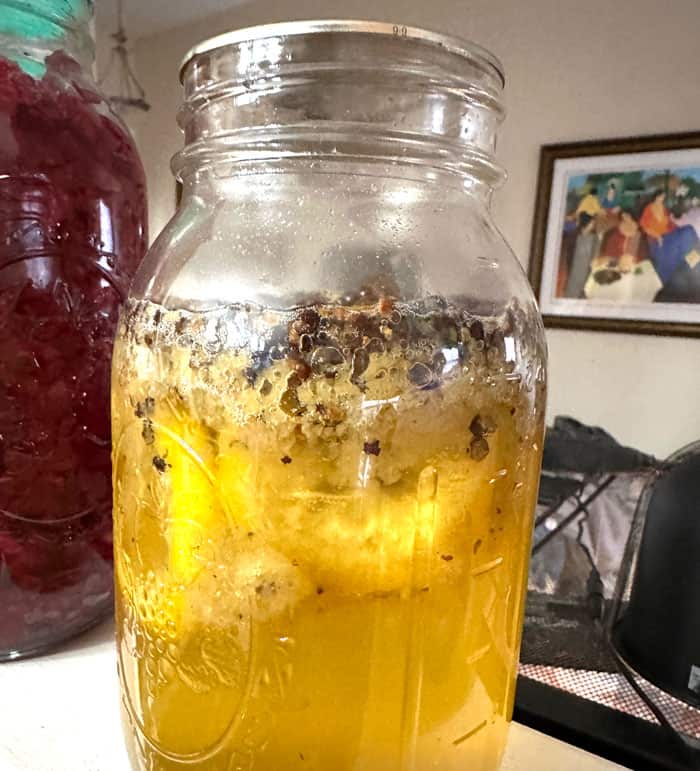
5. Strain and refrigerate
After about 10 days, strain the ingredients, then put the liquid in an airtight jar in your fridge to stop the fermentation. The cold temperature doesn’t kill the probiotic microbes, it just puts them to sleep, metabolically speaking.
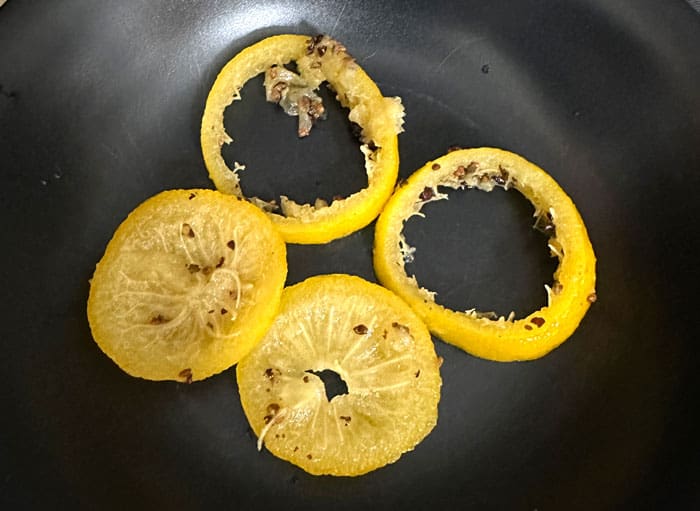
Don’t toss those fermented yuzu or lemon peels because they’re delicious!
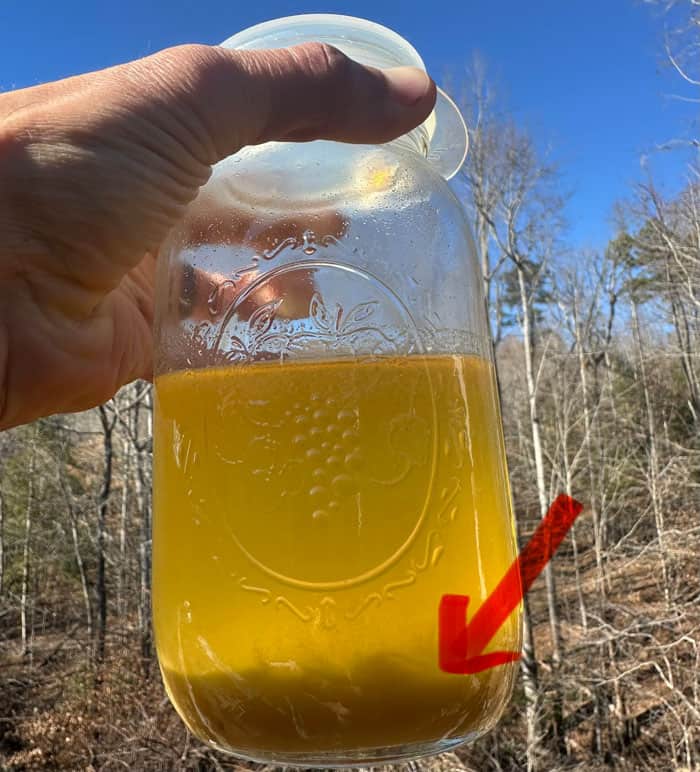
After refrigeration, you’ll notice the liquid becomes more clear as the sediment (aka lees) drops to the bottom of the jar. If you want, you can pour off the clear liquid and compost the lees, although it’s perfectly safe to consume the lees and it doesn’t have any off flavors. We drink ours lees and all.
Serving notes:
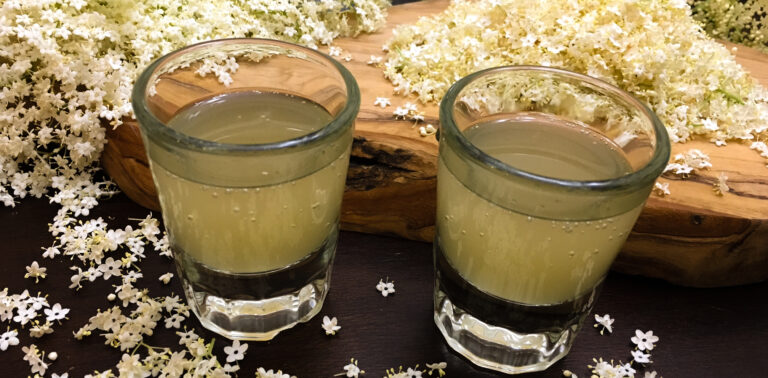
- The flavor of this ferment is pretty concentrated so you can stretch it by serving it 50-50 with a sparkling water.
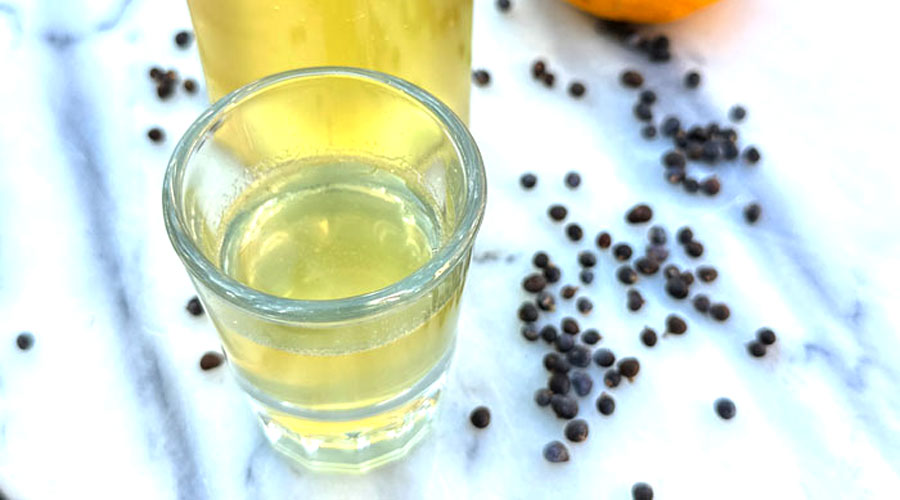
- When drinking at full concentration, we recommend using small amounts (shot glass) and serving it in cordial glasses.
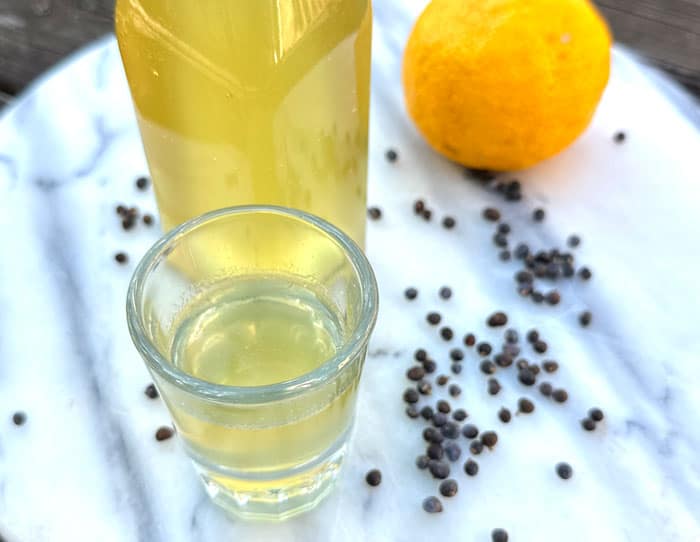
Recipe: Juniper berry, yuzu, and honey fermented cordial
Wild-fermented juniper berry, yuzu, and honey sparkling cordial
Equipment
- 1 glass quart jar (don’t use plastic or it will leach into the ferment)
- mortar and pestle
Ingredients
- 1 whole ripe yuzu, thin-sliced and de-seeded (substitute: one lemon, preferably a Meyer lemon)
- 1/4 cup fresh or dried juniper berries (preferably juniper berries from Eastern red cedar – Juniperus virginiana)
- 1 cup unpasteurized honey
- 1 tsp citric acid
- water as-needed to get to the 3.5 cup level on quart jar AFTER other ingredients added to jar
Instructions
- Thin-slice your yuzu, then remove the seeds. Mash the juniper berries in a mortar and pestle.Add the yuzu, juniper, honey, and citric acid to a 1 quart glass jar. Add water up to around the 3.5 cup mark on the jar. Stir ingredients together. Don't worry if honey doesn't completely dissolve at this point.
- Place lid on the jar which allows the ferment to “burp” – either a) a cloth or paper napkin held in place with a rubber band, or b) a metal lid that’s not fastened on to the jar.
- Vigorously stir the ferment with a clean spoon twice daily, about every 12 hours. It will get quite bubbly around days 4-5. At this point, begin taking small taste after stirring in order to monitor the flavor development.
- After ~10 days, strain the ingredients, then put the liquid in an airtight jar in your fridge to stop the fermentation. Eat the fermented yuzu skins! After ~24 hours in the fridge, the liquid will clear as the lees drops to the bottom of the jar. If desired for aesthetic reasons, you can pour the clear liquid into a new jar in order to dispose of the lees, but we drink them both.
- Serve small quantities in cordial glasses OR serve in larger glasses mixed 50-50 with sparkling water.
Drop us a comment and recipe rating to let us know how you enjoy your fermented juniper berry-yuzu cordial!
-Aaron & Susan