
How to choose the best duck breed(s) for you
Tyrant Farms' articles are created by real people with real experience. Our articles are free and supported by readers like you, which is why there are ads on our site. Please consider buying (or gifting) our books about raising ducks and raising geese. Also, when you buy through links on our site, we may earn an affiliate commission. Learn more
How do you choose the best duck breed for you? Every duck breed has unique features and benefits, so it’s important to try to match your needs and wants with the optimal duck breed. In this article, you’ll find out how!
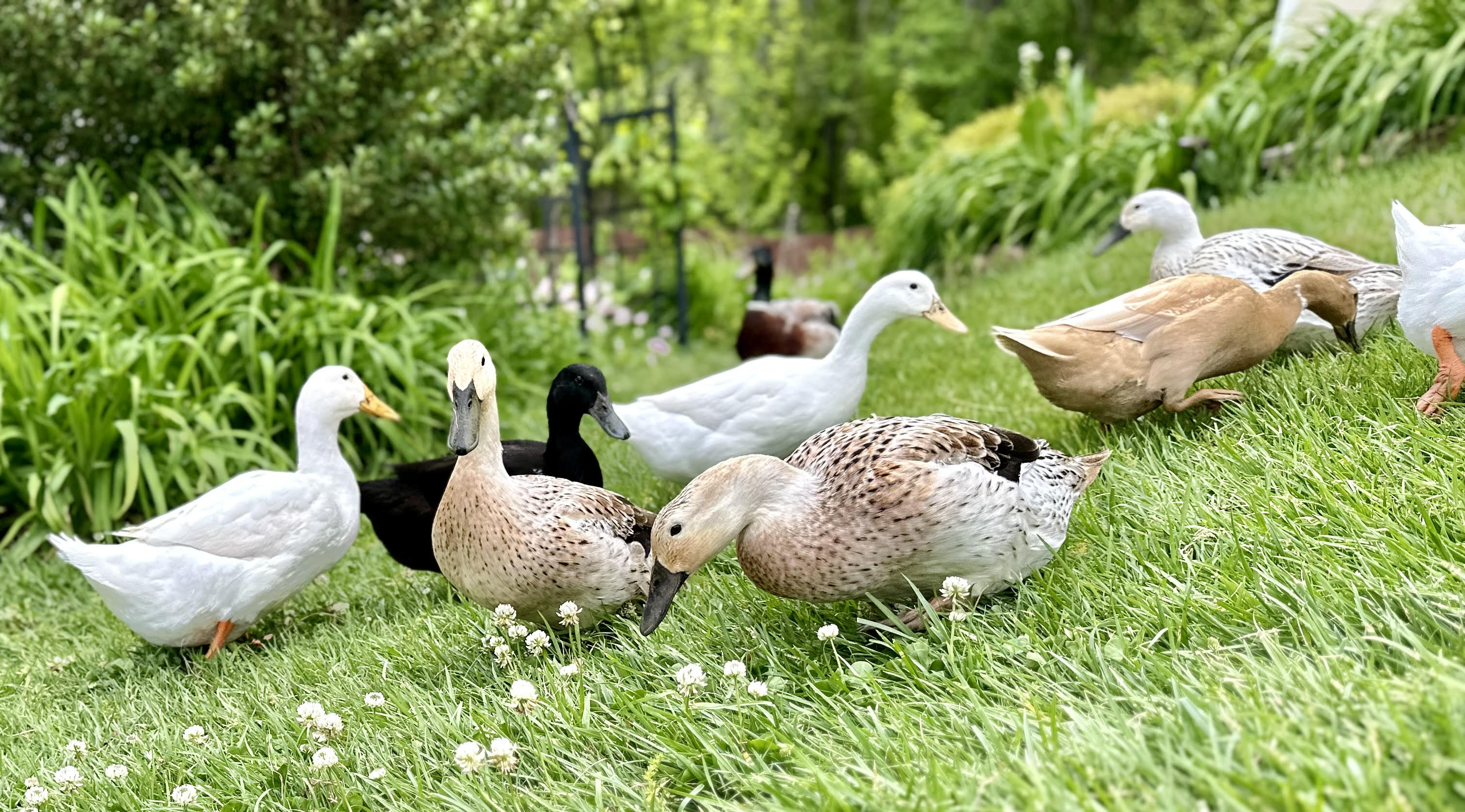
Every modern breed of domesticated duck originated from wild Mallards (Anas platyrhynchos). The exception to this rule is Muscovy ducks (Cairina moschata), which are a separate branch on the duck family tree.
The first known Mallard domestication took place in Asia about 4,000 years ago. It’s unknown when Muscovies were first domesticated, but it likely happened thousands of years ago in their native range of Mexico, Central, and South America.
Duck breed selection is a very important consideration for backyard or pet duck parents. That’s because each breed of duck has different features, characteristics, and baseline personalities/temperaments.
This is similar to selecting heirloom tomatoes for your garden: if you want to grow small currant tomatoes for salads, you’d be better served choosing ‘Matt’s wild’ rather than ‘Cherokee purple’ tomatoes.

Which duck breed features matter to you?
When selecting a duck breed or breeds, it’s helpful to start by assigning a numeric value across a range of features that are important to you. This will not only help you determine which features are most important and least important to you in a duck, but also help you better make an impartial decision about which breed(s) to get.
Examples of duck breed features you may wish to consider:
- Egg production
- Calmness
- Foraging ability
- Meat production/mature weight
- Conservation status (if heritage breed conservation is important to you, a breed’s “conservation status” may be an important factor and you’d be more inclined to get a breed listed as Critical or Threatened)
- Other factors – Examples: beauty, size (the larger, the less likely an aerial predator will attack them) etc.
Duck breed analysis
Below is a ranking of popular duck breeds based on some of the criteria listed above. The ranking does not include all duck breeds. The breed evaluation data is sourced from public information provided by Metzer Farms, the largest duck breeding operation in the US. We’ve added our own 1-10 scoring system for each category to help you better quantify the differences between breeds.
A. Egg production:
- Up to 290 eggs/year (Score: 10) – Golden 300 Hybrid Layer, White Layer
- Up to 200 eggs/year (Score: 7) – Grimaud Hybrid Pekin, Pekin
- Up to 180 eggs/year (Score: 6.5) – Black Swedish, Black Runner, Blue Runner, Blue Swedish, Buff, Cayuga, Chocolate Runner, Fawn and White Runner, Rouen
- Up to 175 eggs/year (Score: 6.0) – Jumbo Pekin, Saxony, Silver Appleyard,
- Up to 150 eggs/year (Score: 5.0) – Muscovy, Welsh Harlequin,
- Up to 130 eggs/year (Score: 4.5) – White Crested
- Up to 120 eggs/year (Score: 4.0) – Mallards
B. Calmness (10 = more calm / 1 = less calm)
- Saxony – 9.0
- Muscovy – 9.0
- Silver Appleyard – 8.8
- Welsh Harlequin – 8.7
- Black Swedish – 7.7
- Blue Swedish – 7.0
- Buff – 7.0
- Black Runner – 6.5
- Blue Runner – 6.0
- Chocolate Runner – 5.7
- Rouen – 5.5
- Mallard – 5.0
- Jumbo Pekin – 4.5
- Grimaud Hybrid Pekin – 4.5
- Pekin – 4.5
- White Layer – 3.3
- Fawn and White Runner – 2.5
- Golden 300 Hybrid Layer – 2.3
- Cayuga – 1.2
- Khaki Cambpell – 1.0
- White Crested – 1.0
C. Foraging Ability
- Excellent (Score: 10) – Muscovy
- Very good (Score: 7.5) – Runner Ducks (all breeds), Khaki Campbell, Mallards, Silver Appleyard
- Good (Score: 5) – Black Swedish, Blue Swedish, Buff, Cayuga, Golden 300 Hybrid Layer, Rouen, Saxony, Welsh Harlequin, White Layer
- Fair (Score: 2.5) – Jumbo Pekin, Grimaud Hybrid Pekin, Pekin, White Crested
D. *Conservation Status (most to least **threatened):
Ideally, your ducks can get a minimum of 6 hours of outdoor time in the sun in a safe fenced-in area to play,
- Threatened (Score: 10) – Buff, Saxony, Silver Appleyard
- Watch (Score: 8) – Black Swedish, Blue Swedish, Cayuga, Khaki Campbell, Welsh Harlequin
- Recovering (Score: 6) – Black Runner, Blue Runner Chocolate Runner, Fawn and White Runner
- Plenty (Score: 4) – Rouen
- Abundant (Score: 2) – Jumbo Pekin, Mallard, Muscovy, Pekin
- *The following breeds are currently labeled “No rank” in conservation status since they’re novel hybrid breeds: Golden 300 Hybrid Layer, Grimaud Hybrid Pekin, White Crested, White Layer.
*Note: The conservation status of breeds can and does change. For instance, since we initially got Welsh Harlequins, their status has changed from Threatened to Watch, a positive trend! A good source to help you verify the current conservation status of duck breeds is The Livestock Conservancy.
The importance of breed temperament
For most backyard duck or pet duck parents, we would strongly urge you NOT to undervalue calmness. For us, this has proven to be the most important feature in our ducks.

Ducks that are calmer tend to be less stressed and healthier. Also, they might not love it, but they don’t overreact to being handled or picked up by humans, which is especially important when they’re sick, injured, headed to a vet appointment, or having their feet looked at for signs of serious bumblefoot infections. And calmer breeds tend to be more amenable with conversion to “pet” status, which involves living in close proximity to humans who pet and hold them.
(Read: 9 tips and tricks for keeping indoor pet ducks.)
Another reason calmness is important for urban duck parents: noise. If you live in a residential area, you have to assume your neighbors won’t find quacking ducks as adorable as you do. Calmer ducks are less noisy ducks, and less noisy ducks will likely be more conducive to good neighborly relations.
Each duck is a unique individual
The numbers listed above are breed averages. However, it’s important to note that there is individual variability within a duck breed. For instance:
- Some of our Welsh Harlequins seem naturally more calm and open to human handling than others despite sharing the same breed genetics.
- Once she learned to trust us (through lots of tricks and treats), our rescued Jumbo Pekin who was once terrified of us has turned out to be our friendliest duck.
So just because one breed has a higher calmness score than another breed doesn’t mean that an individual duck in a less calm breed can’t make a great pet that loves being around his or her human caregivers.
Additionally, how you raise and treat your ducks also has a big impact on their temperament.
Another important consideration: breeds prone to injury and illness
Unfortunately, some duck breeds are more prone to injury and illness than others. Key examples:
- Crested Ducks – Under those cute puffs of feathers, crested ducks frequently have cranial defects including the condition known as “open skull.” This can lead to all sorts of baseline neurological problems and also debilitating injuries during mating. (The top duck holds on to the bottom duck via their head and neck feathers while mating.)
- Large breeds – The larger the duck breed, the more prone they are to: a) obesity and associated chronic health problems including arthritis, and b) acute injuries to their legs and feet (slipped tendons, bumblefoot, etc.).
- Prolific egg layers – High egg production, which we’ll define as multiple hundreds of eggs per year, takes an enormous physical toll on ducks. Ducks bred for maximum possible egg production are going to be more prone to reproductive and metabolic health problems, especially as they hit 2+ years old. Through certain diet and exercise regimens and/or forcing a duck to go broody you can reduce overall egg production in order to improve the health of your ducks. However, it may be more difficult to reduce egg production in a duck bred to produce up to 300 eggs per year versus a duck bred to produce up to 200 eggs per year.
How to find the duck breed(s) that’s right for you
Ready to select the duck breed (or breeds) that’s right for you? Here’s what we’d recommend:
Step 1: Based on the criteria above, list the features that are most important to you in a duck, from most to least important.
Step 2: Weigh the most important features higher than the least important features. For instance, if egg production is most important to you, you might weight it 1.5x higher than the least important feature (example: foraging ability). So in this example, foraging would be weighted at 0.5x.
Step 3: Calculate the breeds that are best suited to your needs. Then do more research on the individual breeds to determine which you want to get.
Also, keep in mind the additional factors listed above: 1) the importance of temperament, and 2) health considerations.
Example analysis using our “duck calculator”:
Let’s say you’re a market gardener and the two most important duck breed features to you are: 1) egg laying ability, and 2) foraging ability. Less important features to you are: 1) calmness, and 2) conservation status.
Duck breed calculation:
Based on this example scenario, you’d calculate your duck breed analysis as follows:
a. Egg production
The scores below are based on a 1.5x multiplier of the original score since this feature is more important.
- Score: 15 – Golden 300 Hybrid Layer, White Layer
- Score: 12.75 – Khaki Campbell
- Score: 10.5 – Grimaud Hybrid Pekin, Pekin
- Score: 9.75 – Black Swedish, Black Runner, Blue Runner, Blue Swedish, Buff, Cayugga, Chocolate Runner, Fawn and White Runner, Rouen
- Score: 9.0 – Jumbo Pekin, Saxony, Silver Appleyard,
- Score: 7.5 – Muscovy, Welsh Harlequin,
- Score: 6.75 – White Crested
- Score: 6.0 – Mallards
b. Foraging ability
The scores below are based on a 1.5x multiplier of the original score since this feature is more important.
- Score: 15 – Muscovy
- Score: 11.25 – Runner Ducks (all breeds), Khaki Campbell, Mallards, Silver Appleyard
- Score: 7.5 – Black Swedish, Blue Swedish, Buff, Cayuga, Golden 300 Hybrid Layer, Rouen, Saxony, Welsh Harlequin, White Layer
- Score: 3.75 – Jumbo Pekin, Grimaud Hybrid Pekin, Pekin, White Crested
c. Sociability
The scores below are based on a 1.0x multiplier of the original score since this feature is less important.
- Saxony – 9.0
- Muscovy – 9.0
- Silver Appleyard – 8.8
- Welsh Harlequin – 8.7
- Black Swedish – 7.7
- Blue Swedish – 7.0
- Buff – 7.0
- Black Runner – 6.5
- Blue Runner – 6.0
- Chocolate Runner – 5.7
- Rouen – 5.5
- Mallard – 5.0
- Jumbo Pekin – 4.5
- Grimaud Hybrid Pekin – 4.5
- Pekin – 4.5
- White Layer – 3.3
- Fawn and White Runner – 2.5
- Golden 300 Hybrid Layer – 2.3
- Cayuga – 1.2
- Khaki Cambpell – 1.0
- White Crested – 1.0
d. Conservation status
The scores below are based on a 0.5 multiple of the original score since this feature is least important.
- Score: 5 – Buff, Saxony, Silver Appleyard
- Score: 4 – Black Swedish, Blue Swedish, Cayuga, Khaki Campbell, Welsh Harlequin
- Score: 3 – Black Runner, Blue Runner, Chocolate Runner, Fawn and White Runner
- Score: 2 – Rouen
- Score: 1 – Jumbo Pekin, Mallard, Muscovy, Pekin
- *Score: 1 – Golden 300 Hybrid Layer, Grimaud Hybrid Pekin, White Crested, White Layer (*This is a somewhat arbitrary score based on a conservation status of “no rank” since they’re new breeds.)
e. TOP SCORES
- Silver Appleyard: : a. 9.0 + b. 11.25 + c. 8.8 + d. 5.0 = 34.05
- Muscovy: a. 7.5 + b. 15 + c. 9.0 + d. 1 = 32.5
- Black Runner: a. 9.75 + b. 11.25 + c. 6.5 + d. 3 = 30.5
- Saxony: a. 9.0 + b. 7.5 + c. 9.0 + d. 5.0 = 30.5
- Blue Runner: a. 9.75 + b. 11.25 + c. 6.0 + d. 3 = 30
- Chocolate Runner: a. 9.75 + b. 11.25 + c. 5.7 + d. 3 = 29.7
- Buff: a. 9.75 + b. 7.5 + c. 7.0 + d. 5.0 = 29.25
- Khaki Campbell: a. 12.75 + b. 11.25 + c. 1.0 + d. 4 = 29
- Black Swedish: a. 9.75 + b. 7.5 + c. 7.7 + d. 4 = 28.95
- Blue Swedish: a. 9.75 + b. 7.5 + c. 7.0 + d. 4 = 28.25
- Welsh Harlequin: a. 7.5 + b. 7.5 + c. 8.7 + d. 4 = 27.2
- White Layer: a. 15 + b. 7.5 + c. 3.3 + d. 1.0 = 26.8
- Fawn and White Runner: a. 9.75 + b. 11.25 + c. 2.5 + d. 3 = 26.5
- Golden 300 Hybrid Layer: a. 15 + b. 7.5 + c. 2.3 + d. 1.0 = 25.8
- Rouen: a. 9.75 + b. 7.5 + c. 5.5 + d. 2 = 24.75
- Mallard: a. 6.0 + b. 11.25 + c. 5.0 + d. 1 = 23.25
- Cayuga: a. 9.75 + b. 7.5 + c. 1.2 + d. 4 = 22.45
- Grimaud Hybrid Pekin: a. 10.5 + b. 3.75 + c. 4.5 + d. 1.0 = 19.75
- Pekin: a. 10.5 + b. 3.75 + c. 4.5 + d. 1 = 19.75
- Jumbo Pekin: a. 9.0 + b. 3.75 + c. 4.5 + d. 1 = 18.25
- White Crested: a. 6.75 + b. 3.75 + c. 1.0 + d. 1 = 12.5
In this example scenario, it would be prudent for the market gardener to take a more in-depth look at the top five duck breeds as calculated above: Silver Appleyards, Muscovies, Black Runners, Saxonies, and Blue Runners. These breeds are likely going to be the best option based on the features deemed most important to them.
Why evaluate duck breeds prior to getting ducks?
Can you see how doing such an analysis is important to matching your wants and needs to a duck breed, similar to the way you might do a cursory evaluation prior to going car shopping?
And just as with car shopping, you might find that more subjective features like physical beauty are important to you. In fact, one of the primary reasons we started with Welsh Harlequins is because they’re extraordinarily beautiful ducks (who also happen to be relatively calm with good egg laying and foraging abilities).
So, take the time to do your own breed evaluation before you go “duck shopping”! Unlike a car, you can’t return your ducks to the dealer or trade them in.
Ducks are living, breathing, social critters who will rely on you for their health, wellbeing, and happiness, so please be committed to taking the best care possible of whatever breed or breeds you settle on!
Wild card: best ducks for worst climates
There is one additional, important factor you may need to consider before selecting a duck breed: your climate. If you live in an extremely cold environment or an extremely hot environment, certain breeds may be better suited for your location.
Unfortunately, there is no detailed data or research demonstrating exactly which breeds are better for various climate extremes.
Our input:
- For colder climates (Agricultural Zones 5 or lower), avoid Muscovies (which are adapted to warmer climates) and Runner ducks (which were bred in the tropics.) Any other Mallard-derived breed will do well in cold climates provided they have a dry coop to bed down in at night that’s sheltered from the elements.
- For warmer climates (Agricultural Zones 9+), pretty much any duck breed will do fine (Mallards and Mallard-derived breeds are tolerant of a wide range of weather, including heat). However, Muscovies and Runners are more likely to thrive in the hotter weather. In extreme hot climates (and extreme summer heat), it’s especially important to make sure your ducks have access to swimming water and shade to cool off in regardless of breed.
If you live in one of these climate extremes, you may need to eliminate certain breeds from contention, even if they rank high based on other features that are important to you.
We hope this information proves helpful in your quest to find the right duck breed for you!




Hi,
I’m thinking of getting 2 ducks as indoor/house pets and I have read a lot of great infomation but one thing I am unsure about is what breed of duck would be best for me. I am going to be the primary owner in my family since my parents aren’t interested in getting a duck and I will probably move out with them when I graduate from uni. The main problem is that I need to find a breed of duck that will get along with my mom’s collie dog since it has been a big problem with my past pets and I have had to actually give one away because my dog hassled it that much. Also I live in the suburbs of Australia so I need a duck that will be super affectionate but quiet. Space isn’t much of an issue since I have a big (compared to others in my suburb) backyard.
Mikky
Hi Mikky!
We’re certainly not going to tell you or anyone else what to do, but there are two things that are immediately concerning from your inquiry:
1) The presence of a collie dog that sounds like it could kill or injure a duck.
2) Your age and likelihood of having to try to move the ducks with you as you transition through the next phases of your life.
Ideally, there wouldn’t be a predator living with your ducks. And ideally, your ducks’ living arrangements would be secure for years to come in order to reduce the likelihood of rehoming or abandonment. So many stories of abandoned ducks at parks and ponds start this way – and those ducks almost inevitably end up injured, dead, or in wildlife rescue operations. If you’re set on raising ducks, we’d highly encourage you to wait some years into the future until you’re settled down and can provide them a safe, secure, and stable living environment.
Also, if you’re primarily interested in having quiet pet ducks, we’d encourage you to eventually get drakes instead of females. Females of all breeds can be quite loud, but the drakes only make a low, raspy sound that doesn’t carry as far or as loudly as the distinctive female quack. Since drakes don’t lay eggs, they’d also be less prone to health/reproductive problems as well.
Lastly, we’d encourage you to read our article 9 tips & tricks for keeping indoor pet ducks before you jump in: https://www.tyrantfarms.com/nine-tips-and-tricks-for-keeping-indoor-pet-ducks/.
Thanks and best wishes!
Hi! Love this site and all of the super helpful info. Wondering why you didn’t include call ducks in this analysis?
Hi Noble! Great question. Unfortunately, there are other duck breeds left out of this analysis, including Call ducks. That’s because the data comes by way of duck breeders/workers at Metzer Farms, and they don’t raise every breed of duck. We also don’t have personal experience with Call ducks, so we’re not confident adding a breed assessment here. If you have extensive experience with Call ducks and would like to provide some input, we’d love to hear it and consider it for inclusion in the article.
Where did you get your ducks? We are looking to get some welsh harlequins and there are a number of different hatcheries. Thank you in advance!
Hi Mary! We got most of our ducks (they’re Welsh Harlequins) from Metzer Farms, since we needed to get sexed runs. Metzer is a very good hatchery that will ship day old ducklings. Best of luck to you with your new flock!
Great information sent! I am getting my first set of ducks this spring, the duck type is not the highest in egg production, but good at calmness. Do you have information how to store extra eggs?
Hi Honey! We only have five laying ducks and we eat a lot of eggs, so we seldom have an overabundance of eggs. If our eggs are unwashed (e.g. still have the bloom on) we just store them in duck-sized egg cartons on our kitchen counter for up to ~14-20 day. If they’re washed (no bloom), we store them in egg cartons in our fridge. One thing that helps is to use a pencil to write the date on the bottom of each egg after you’ve collected them so you can make sure to eat your oldest eggs first. Hope this helps and best wishes with your flock!
Well done. Don’t overlook noise as a factor in calmness. Along with general friendliness, calmness also relates to how much noise you can expect. If you are not on a large plot of land and have neighbors close by, you might want to decide if you like your neighbors before choosing. Mallards particularly can be heard for miles when they want to. My Saxony ducks are very quiet unless they are hanging around those low-brow, bad influence Mallards on the pond.
Great point, thanks Douglas! A funny side note: researchers in England found that rural and urban Mallards had different “dialects” of sorts. The urban Mallards had much louder vocalizations, presumably to be heard by their peers over the loud background noise of the city. Mallards living in rural areas had much lower volume vocalizations. The same is probably true of humans. 😛
Our Welsh Harlequins are generally pretty quiet throughout the day unless: a) they run out of food, b) something scares them (they have a distinct vocalization for snake that can be heard a mile away), or c) we’re late on letting them out to forage the grounds at night. Funny creatures.